男人帮
R. Kelly Slapped With 30-Year Prison Sentence Over Sex Trafficking, Racketeering Charges_我的网站

A | Disgraced singer-songwriter R. Kelly was sentenced to 30 years in federal prison on Wednesday, marking the end of a six-week trial in Brooklyn that included testimony from dozens of witnesses, including those who accused the 55-year-old of both sexual and physical abuse.,The US Attorney's Office for the Eastern District of New York was aiming for Kelly to be given at least 25 years behind bars, per a June 8 memo. The filing set forth that Kelly, now 55, should spend the rest of his life behind bars due to the fact he "avoided punishment for almost 30 years and must now be held to account.",Kelly's attorneys argued their client should only serve a decade behind bars because he "experienced a traumatic childhood involving severe, prolonged childhood sexual abuse, poverty, and violence.”,During sentencing Wednesday afternoon, US District Judge Ann M. Donnelly stated to the court that “the public has to be protected from behaviors like this.”,"These crimes were calculated and carefully planned and regularly executed for almost 25 years," Donnelly said, as reported by the New York Times.,The judge recounted a number of testimonies during sentencing, highlighting Kelly's pattern of sexual abuse and violence against women, girls, and boys.,Kelly's legal team plans to appeal the sentencing.,"We were prepared for it," said defense attorney Jennifer Bonjean, who represented disgraced comedian Bill Cosby in a civil case he lost earlier this month. "We are now prepared to fight this appeal.",© AP Photo / Elizabeth WilliamsIn this courtroom sketch, R. Kelly and his attorney Jennifer Bonjean, left, appear during his sentencing hearing in federal court, Wednesday, June 29, 2022, in New York. The former R&B superstar was convicted of racketeering and other crimes. In this courtroom sketch, R. Kelly and his attorney Jennifer Bonjean, left, appear during his sentencing hearing in federal court, Wednesday, June 29, 2022, in New York. The former R&B superstar was convicted of racketeering and other crimes. © AP Photo / Elizabeth Williams,Federal prosecutors say Kelly used his "deep network" and "larger-than-life musical persona" to gain access to teenagers and young adults--"many of whom were particularly vulnerable.","The government has little doubt that if afforded an opportunity to offend again, the defendant would do so," prosecutors said earlier this month. "He poses a serious danger to the public.",Lizzette Martinez, a woman featured in the documentary 'Surviving R. Kelly,' was accompanied by her attorney Gloria Allred when she took the stand to provide a witness statement.,"January 1995 eventually changed me forever," Martinez testified, detailing that she was a 17-year-old aspiring singer when she met Kelly in a mall.,Now 45, Martinez told the court that she was "left in shock, confused, and in tears" when Kelly, who promised to mentor her, began to abuse her.,“Robert, you destroyed so many people’s lives,” Martinez told Kelly, who did not make eye contact.,YouTube Deletes Two R. Kelly’s Channels Amid Sex-Trafficking Conviction6 October 2021, 09:18 GMT,“I do not know how to put a price on all I’ve gone through,” she said. “I am now 45, a mother and I struggle with mental health.”,Rumors and even footage of Kelly's misdeeds with minors and women have been circulating since the 90s, around the same time Kelly married teenage R&B artist Aaliyah. Despite dozens of alleged victims coming forward over the decades, accountability appeared to avoid Kelly until the 2019 documentary "Surviving R. Kelly" coincided with the #MeToo movement.,The intersection of the #MuteRKelly and #MeToo movements drummed up public support for victims seeking litigation against the Grammy-award-winning singer. Kelly is still facing a number of criminal charges in Chicago, Illinois, and Minnesota.,Kelly has remained behind bars since his initial arrest in July 2019. The singer-songwriter did not take the stand during trial.。
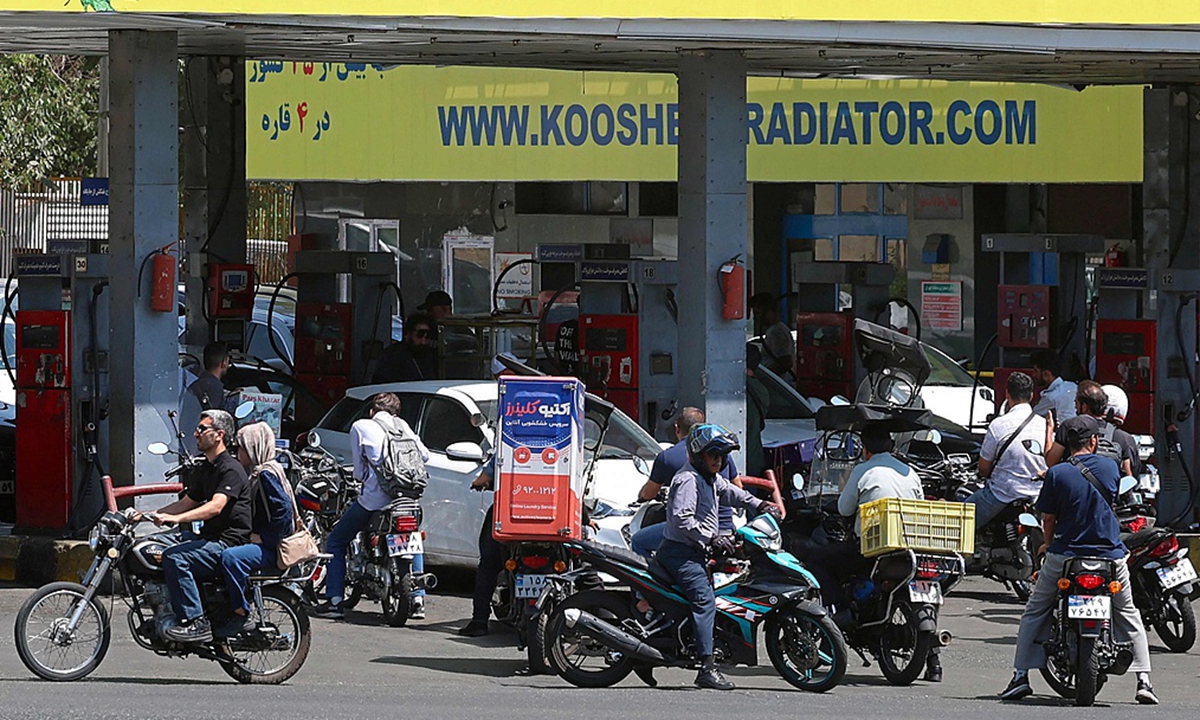
As military strikes and diplomatic negotiations have both failed to bring an early end to the roughly six‑month‑old US-Iran conflict, Washington rolled out new sanctions against Tehran on Monday local time intended to further strangle its economy. Iran, for its part, has vowed a tougher pushback.
In a news conference on Monday, Treasury Secretary Scott Bessent threatened new sanctions on countries refusing to cut economic ties with Iran, following recent rhetoric from Washington threatening an "economic D-Day" for Iran.
Meanwhile, the Office of Foreign Assets Control (OFAC) under the US Treasury announced secondary sanctions on nearly 60 entities, individuals, and vessels in multiple jurisdictions which, according to the US' claims, enable Iran's activities, including so-called nuclear and missile technology procurement, cyber operations, and oil-revenue generation networks.
According to Reuters, those sanctions targeted businesses in China, the UAE, Singapore and several other countries, including a cooking-oil refinery in France, but did not include any of the Chinese financial institutions suspected of facilitating Iran's oil trade.
In response to US Treasury Secretary Scott Bessent laying out plans for economic asphyxiation of Iran, expanding Washington's secondary sanction threats and warning of dire consequences for countries that do not join the campaign, Chinese Foreign Ministry spokesperson Lin Jian said at a press briefing on Tuesday that China has made clear on many occasions its firm opposition to illicit unilateral sanctions that have no basis in international law or the authorization of the UN Security Council.
"Economic warfare and maximum pressure provide no solution. On the contrary, they only serve to fuel tensions and lead to risk spillover, which will disrupt the global economic and financial order, and harm the legitimate rights and interests of other countries," the spokesperson said.
The pressing task is to facilitate the deescalation of the situation and return to dialogue and negotiation as soon as possible, Lin said, adding that China will do everything necessary to firmly safeguard its rights and interests, Lin added. Lin also said China's cooperation with Iran is conducted within the framework of international law, thus should not be disrupted.
When asked whether China has received any such timeline, as the US stated it would give countries a timeline on when to shut down the actions that it has identified, and how China intends to respond to the relevant announcements by the US Treasury involving China-based entities and individuals, Chinese Foreign Ministry spokesperson Lin Jian stated on Tuesday that China is closely following the developments, and will do everything necessary to firmly safeguard our rights and interests.
In May this year, China's Ministry of Commerce issued a blocking ban prohibiting any recognition, enforcement or compliance with US sanctions imposed on five Chinese companies on the grounds of their alleged involvement in Iranian petroleum transactions.
Relying on its financial hegemony and long‑arm jurisdiction, the US enforces unilateral sanctions with no basis in international law. Such measures severely undermine fundamental consensus for international trade and erode the existing international order, Zhou Mi, senior research fellow at the Chinese Academy of International Trade and Economic Cooperation, told the Global Times on Tuesday.
In essence, Washington is imposing its Iran‑focused policies to enterprises across the globe, compelling third‑party actors to fall in line with its diplomatic objectives, Zhou noted.
The latest sanctions would affect a broader range of countries, industries and firms. They will not only draw wider opposition from the international community, but also boomerang on the interests of US‑owned enterprises, he added.
Fewer levers left
"We are launching an economic onslaught against Iran's financial connections around the globe," Bessent claimed at a press conference. "Our objective is to sever every economic lifeline" that sustains the country, he said, according to a Treasury release.
The US Treasury Department said in a release that the new sectoral sanctions determinations target five critical sectors - digital assets, technology, gold, aviation and shipping - that the US claimed Iran has relied on to support its economy.
US Treasury claimed that "any entity that facilitates money laundering or sanctions evasion on behalf of Iran risks being cut off from the US financial system."
OFAC also suspended several general licenses that previously authorized certain remittance payments to Iran and Iranian access to the US cultural and academic system. The office also issued additional guidance on the so-called sanctions risks of bowing to Iranian demands related to shipping in the Strait of Hormuz.
Mohammad Mokhber, an aide to Supreme Leader Mojtaba Khamenei, said in an X post on Monday that Iran's response to US sanctions and pressure will be "more decisive than before."
Iranian Economy Minister Ali Madanizadeh said that Tehran "is and was ready," with a two-year plan to counter Washington's new sanctions. He told state television that "it seems they wished to suffer yet another defeat," per an AFP report.
Iranian Parliament Speaker Mohammad Bagher Ghalibaf responded in an X post that "the Americans know no one will believe their nonsense," noting that the US is not in a position economically to restrict its relations with other countries.
Alan Eyre, a distinguished diplomatic fellow at the Middle East Institute, told NBC News that after six months of combat, the US government "has few remaining levers it can use to convince Iran's major trading partners to materially reduce their economic ties."
While Washington's maximum‑pressure campaign may deliver short‑term shocks to Iran's economy, it can hardly "strangle" the country completely, said Liu Zhongmin, a professor at the Middle East Studies Institute of Shanghai International Studies University.
He added that Iran's economic resilience cannot be underestimated. Having borne decades of crippling sanctions from the US and Western nations, Tehran has built substantial experience in sanction‑busting and developed coping mechanisms ranging from basic‑industry self‑reliance and regional trade networks to oil‑for‑goods swaps and non‑US dollar‑denominated trade. Furthermore, the Strait of Hormuz remains a source of strategic leverage for Iran to push back against US pressure.
The expert said that Tehran and Washington are encountering "a battle of wills," and Iran believes the economic costs the US would suffer from a Hormuz blockade would outweigh the damage inflicted on Iran by sanctions.
Washington's "economic strangulation" policy risks ending in failure unless it yields short‑term outcomes, particularly securing the opening of the Strait of Hormuz, Liu added.
Self-created dilemma
As the US ramps up pressure on Iran, Americans are growing averse to a protracted war.
According to a Reuters/Ipsos poll that closed on Monday, US public approval of the war with Iran fell to its lowest level since the conflict's early days, with just 31 percent of Americans supporting US military action.
On June 18, the US and Iran signed an MoU, under which the two were scheduled to hold negotiations within a period of 60 days, which ended on August 17, to reach a final agreement. However, the talks' fate remains unclear following renewed escalation between the two countries.
Iranian political analyst Mostafa Khoshcheschm told Al Jazeera that the new US sanctions intended to create an "economic onslaught" were a "political show" of intimidation.
Liu said that by resorting to an "economic strangulation" tactic after miring itself in a fruitless military quagmire over Iran, the US has laid bare its practical predicament and strategic dilemma, and seemingly running out of cards.
Citing sources, CNN reported earlier this month that the US military has exhausted nearly 80 percent of its interceptors for a key missile defense system as senior US military commanders are warning that the Pentagon's munitions stockpile is "dangerously low."
Faced with depleted ammunition stockpiles and insufficient military‑industrial capacity, and amid growing domestic criticism of its Middle East policy, the White House has opted for tough economic measures against Iran, Liu said. "Less costly than military coercion, such moves help Washington strike a tough posture before voters and shun political risks from further military escalation," said the expert.
There is, however, an increasingly obvious paradox in Washington's economic warfare against Iran: the tighter the sanctions, the tighter global energy supplies become, and the higher costs borne by American consumers and businesses, the expert added.
。

B |
Current article:http://rtcihot.cuancuguanzhongnieqinyazhun.cyou/warr7n/gr3dqp.html
Published on:11:38:21